
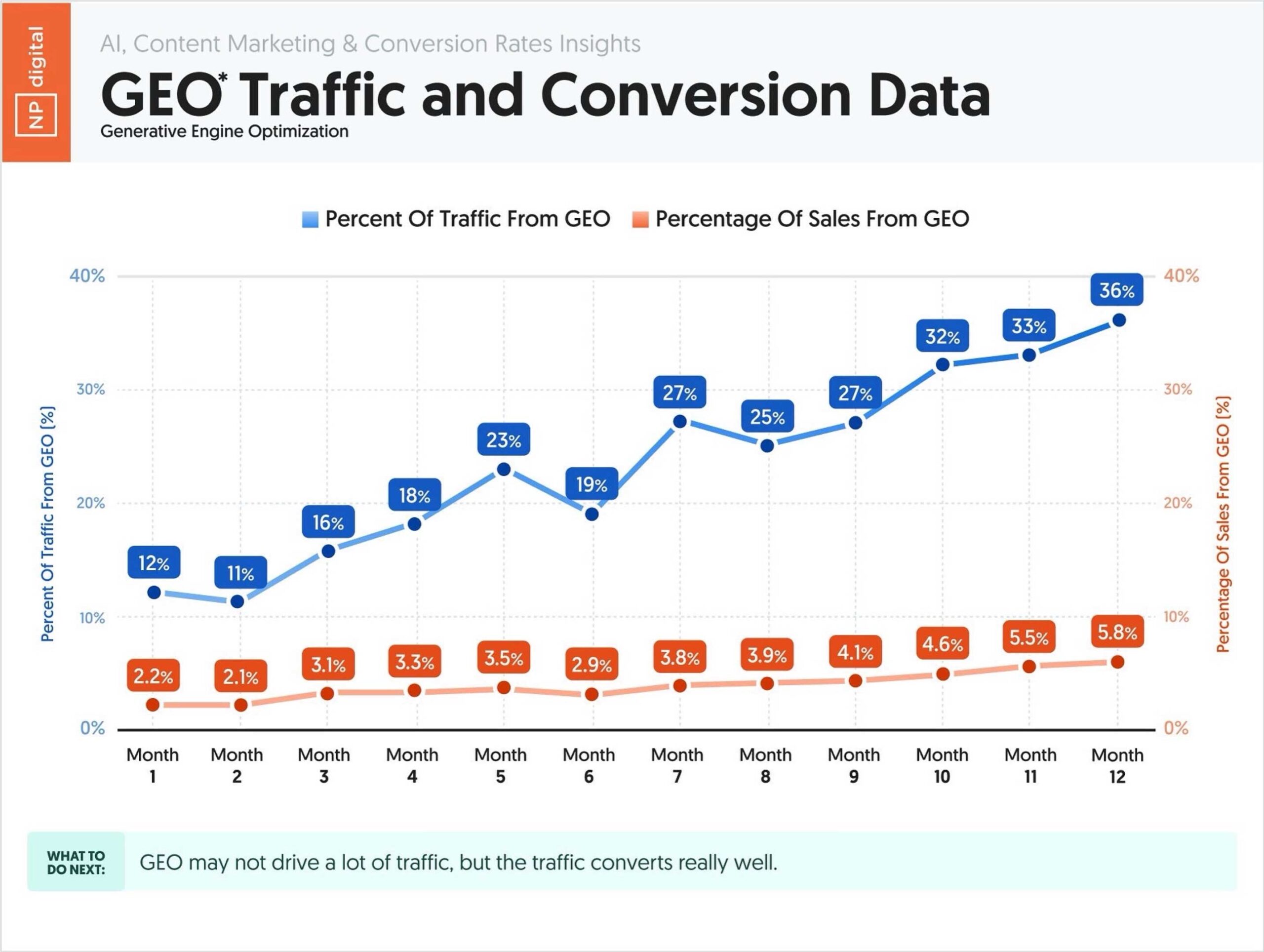
Neil Patel has brought an important topic into the spotlight with GEO (Generative Engine Optimization). His statement: “GEO may generate little traffic, but that traffic converts exceptionally well.” What Patel doesn’t clearly explain, however, is exactly which clicks he defines as GEO traffic. Can he definitively prove that this revenue comes exclusively from AI-generated search results? Before we dive deeper, let’s clarify these questions and show why GEO can only be the first step toward true AI visibility.
GEO vs. AI Visibility – Explained in Simple Terms
What exactly is GEO?
Generative Engine Optimization means optimizing your content specifically for generative AI search results, such as Bing answer boxes. You use traditional SEO tactics and supplement them with simple optimizations in the area of prompt tuning.
Why AI Visibility Offers More:
AI Visibility takes it a step further: It’s not just about becoming visible, but about organizing and linking content in a structured way so that AI models like ChatGPT or Bing don’t just access your content, but prioritize it and understand it fully.
Objective
Key figure
Benefits for Users
While GEO delivers short-term results, AI Visibility guarantees lasting visibility and authority among both users and AI alike.
Three aspects that GEO does not take into account
Zero-Click Potential
Many users interact directly with generative answer boxes without visiting your site—and still make purchasing decisions. This zero-click potential is often overlooked in GEO.
Context and Networking
Isolated pieces of content without context are quickly forgotten. AI Visibility ensures that content remains relevant and interconnected over the long term through structured data and knowledge graphs.
Transparent Data Usage and Monetization
AI Visibility specifically takes into account who is using your content and how you can benefit from it. GEO, on the other hand, focuses exclusively on visibility and clicks, without considering the long-term revenue potential through targeted data analysis.
How to Implement AI Visibility in a Simple and Pragmatic Way
Here are four specific steps you can start taking right away:
- Clearly define entities: Create a simple matrix with columns such as “Product,” “Attribute,” and “Relationship.” This helps AI models categorize your content accurately.
- Create a knowledge graph: Get started easily with plugins like JSON-LD in WordPress to link your content. Advanced teams use tools like Neo4j.
- Make Your Content Prompt-Ready: Organize your content into short, clear FAQ blocks. This allows AI models to quote your answers directly and reach users.
- Establish access controls: Clearly define which content is publicly accessible and which should only be available via APIs or premium accounts. This allows you to precisely control who can access your content and when.
Learn
more
dmcgroup supports you with customized AI integration for your applications. Learn more about our AI expertise:
Conclusion: GEO is your starting point—AI Visibility is your future.
Neil Patel has shown us how important it is to optimize content for generative search results. But if you want to stay successful in the long term, you need more than just short-term GEO measures: AI Visibility guarantees sustainable visibility, optimal user experiences, and full control over your own content.
AI Visibility
Ready to take your next step in AI-driven search? Schedule a no-obligation strategy call with us today!
More articles
Learn more about us and our innovative solutions.

Digital Product Development: 5 Common Mistakes and How to Avoid Them

Branding in the Age of Agent-Based Commerce

AI Analysis During the Prelaunch Phase